
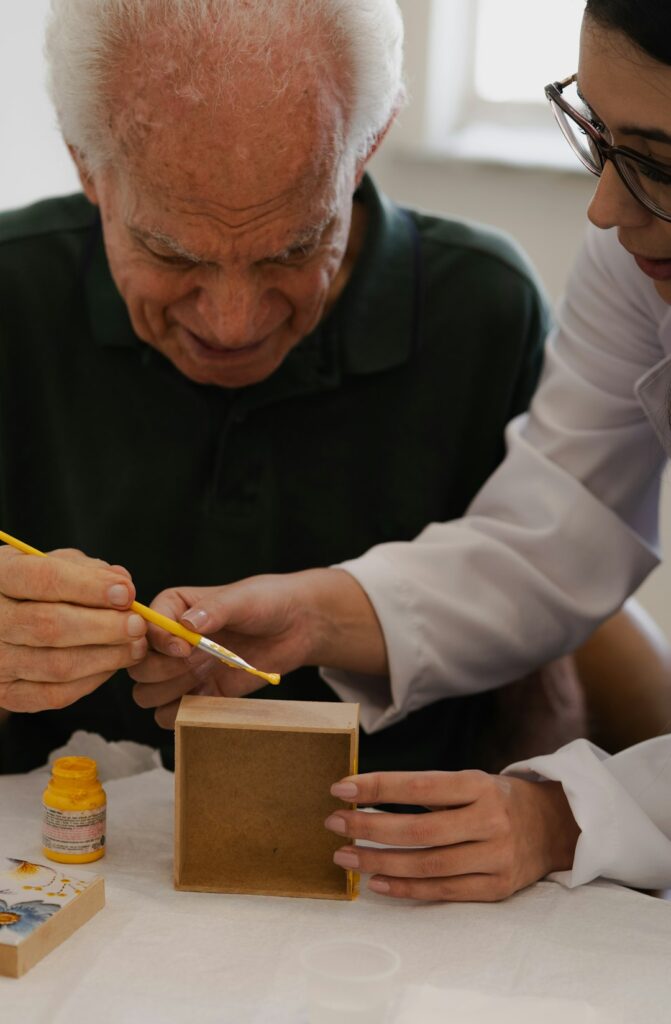
Creative hobbies can give assisted living residents meaningful ways to use their time, express themselves, connect with others, and maintain familiar routines. Activities do not need to be complicated or physically demanding to be enjoyable. The most successful options are usually adaptable, familiar, and easy to begin at different ability levels.
Why do creative hobbies matter in assisted living?
Creative activities support more than entertainment. They can encourage conversation, hand movement, decision-making, memory recall, and a sense of accomplishment.
A hobby may also provide structure during parts of the day that otherwise feel repetitive. Completing a small project, learning a new technique, or sharing a personal story through art can help a resident feel engaged and recognized.
Creative hobbies may support:
- Social connection through shared projects
- Fine-motor movement and hand coordination
- Personal expression and emotional well-being
- Memory stimulation through familiar materials and traditions
- Confidence from completing manageable tasks
- A stronger sense of identity and independence
Participation should remain voluntary. Some residents prefer group activities, while others enjoy quiet projects at their own pace.
Which creative hobbies are easiest to adapt?
The most adaptable hobbies use simple steps, large or lightweight materials, and flexible expectations. Projects should be adjustable for vision changes, arthritis, tremors, limited mobility, or reduced attention span.
Good options include:
Drawing and coloring
Large-format coloring pages, simple sketching, watercolor pencils, and guided drawing can be adjusted for many ability levels. Residents may color abstract designs, seasonal scenes, animals, flowers, or familiar household objects.
Thicker pencils and markers are often easier to grip. Paper can be secured with nonslip material, and an angled surface may reduce wrist strain. The goal does not need to be artistic perfection; choosing colors and making marks can be satisfying on its own.
Collage and paper crafts
Collage projects allow residents to create without needing advanced drawing skills. Materials can include pre-cut paper shapes, magazine pictures, fabric scraps, greeting-card pieces, or printed photographs.
A resident might create a seasonal window decoration, a memory-themed page, or a picture using favorite colors. Pre-cut pieces make the activity more accessible for people who have difficulty with scissors.
Knitting, crochet, and simple textile work
Textile activities may be especially meaningful for residents who have knitted, crocheted, sewn, or quilted in the past. Familiar hand movements can bring back memories and encourage storytelling.
Projects should be simplified when needed. Large needles, thicker yarn, finger knitting, weaving cards, and no-sew fabric crafts can be easier than detailed patterns. A resident may also contribute by selecting colors, sorting materials, or feeling different textures.
Flower arranging and indoor gardening
Small indoor gardening projects can bring natural elements into daily life, especially during cold or rainy periods. Residents may arrange artificial flowers, care for low-maintenance plants, or plant herbs in small containers.
These activities can encourage sensory engagement through color, texture, and scent. Containers should be lightweight and stable. Soil, water, and plant materials should be chosen with allergies, spills, and cleanup in mind.
Are music and storytelling creative hobbies?
Yes. Creative expression does not have to involve making an object. Music, storytelling, and reminiscence can be deeply engaging activities for residents who do not enjoy crafts.
Residents may enjoy:
- Singing familiar songs
- Listening to music from different stages of life
- Playing simple rhythm instruments
- Creating playlists around personal memories
- Writing or dictating short stories
- Sharing family traditions or holiday memories
- Discussing photographs, postcards, or treasured objects
Music can be enjoyed privately or in a group. A resident who does not want to sing may still enjoy tapping along, choosing songs, or discussing what a particular piece brings to mind.
Storytelling projects can be recorded in writing, audio, or a memory book, depending on the resident’s preference and abilities. Conversations should not feel like tests. There is no need to correct every date or detail when the purpose is connection and expression.
How can hobbies be adjusted for changing abilities?
A creative activity should be changed to fit the resident, not the other way around. The same hobby may look different from one day to the next.
Helpful adjustments include:
- Offering large, high-contrast materials
- Using containers that are easy to open
- Providing prepared or partially completed projects
- Breaking activities into short steps
- Demonstrating one step at a time
- Allowing residents to work from a seated position
- Replacing scissors with pre-cut materials
- Using nonslip mats to stabilize paper or containers
- Providing rest periods without treating them as failure
- Offering choices rather than giving open-ended instructions

A resident with limited hand strength might choose colors for a painting while someone else handles the brush. Another resident may enjoy sorting buttons, arranging fabric, or describing how a finished project should look.
What hobbies work well for people with memory loss?
Residents with memory loss often benefit from familiar, repetitive, sensory, and success-oriented activities. The activity should focus on the experience rather than producing a specific finished result.
Useful choices may include folding fabric, sorting large objects by color, arranging flowers, decorating cookies, looking through photographs, singing familiar songs, or painting with broad strokes.
Instructions should be brief and positive. Instead of presenting many supplies at once, offer one or two choices. If a resident loses interest, the activity can be paused or changed without making the person feel unsuccessful.
Projects connected to a person’s background may be especially meaningful. Someone who worked with tools, cooked regularly, gardened, or cared for children may respond well to activities that reflect those experiences.
How can seasonal conditions in West Chester affect activity planning?
Seasonal weather can influence how residents spend their time. Cold winter days, rain, heat, and early evening darkness may increase the appeal of indoor hobbies. Activities can also reflect the changing seasons without requiring outdoor access.
Examples include:
- Making paper leaves during autumn
- Creating winter-themed artwork with textured materials
- Arranging spring colors in a vase
- Painting summer flowers or garden scenes
- Making simple decorations for seasonal celebrations
- Creating a memory collage about favorite outdoor places
During warmer weather, a supervised patio or garden activity may be comfortable for some residents, while others may need shade, shorter sessions, or an indoor alternative. Temperature, hydration, seating, and mobility should be considered before moving activities outdoors.
How can family members support creative interests?
Family members can help by learning what a resident enjoyed earlier in life and bringing that knowledge into activity planning. Useful questions include:
- Did the person enjoy music, cooking, gardening, sewing, drawing, or woodworking?
- Are there favorite colors, subjects, songs, or materials?
- Would the person prefer working alone or with others?
- Are there unfinished projects that could be adapted?
- Which family stories might inspire a memory book or conversation?
Personal supplies do not need to be expensive. A few photographs, familiar recipes, fabric samples, postcards, or handwritten notes may provide more meaning than a large collection of unfamiliar craft materials.
The finished project may be less important than the conversation, concentration, laughter, or sense of control created during the activity. A creative hobby is most valuable when it respects the resident’s preferences and allows participation at a comfortable pace.
